Automatic inline washing
For conveyor-fed production lines where repeatability and integration with filling equipment matter.
Read moreA bottle washer machine should be specified around bottle material, output, contamination level and how the container moves into the next packaging stage.
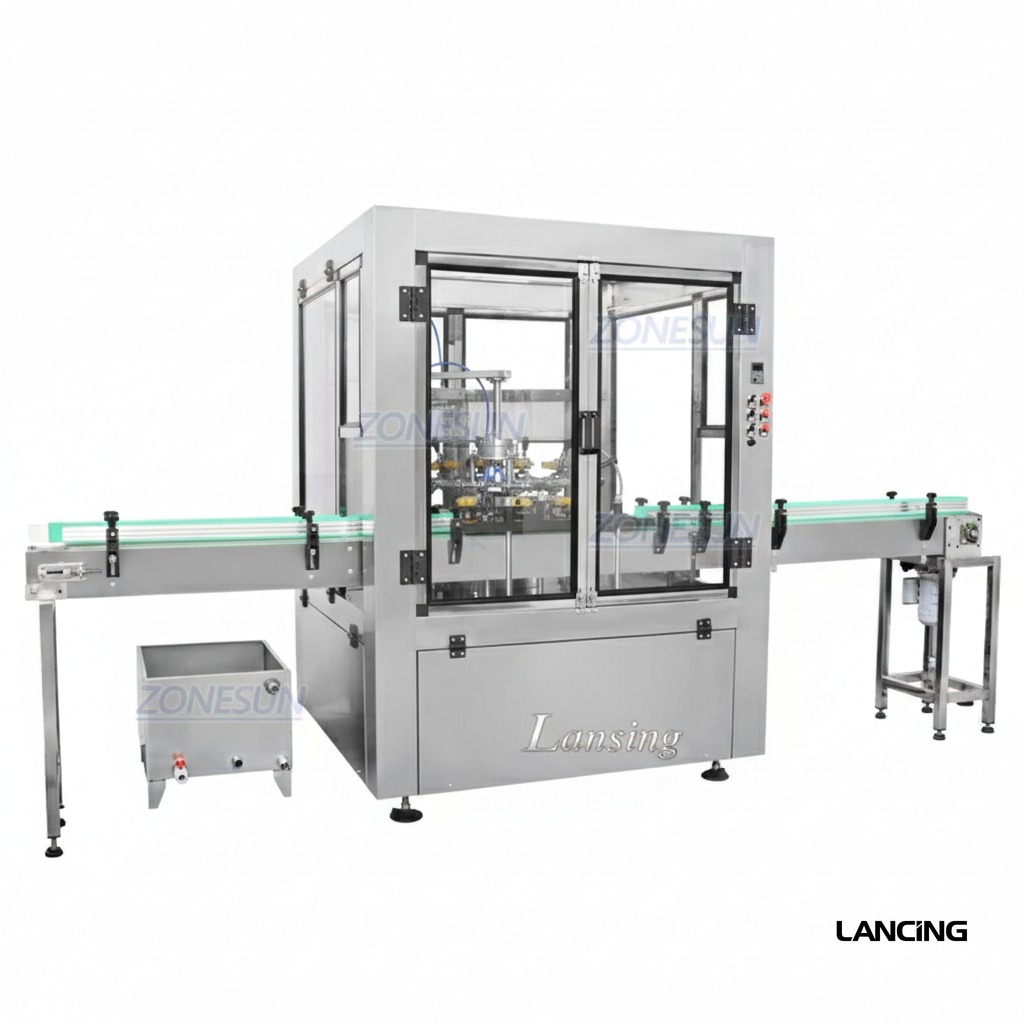
Search terms such as bottle washer machine can describe very different equipment. Some projects need an inline rinser before filling, some need rotary semi-automatic washing, and others need a wash-and-dry machine for more controlled handling.
The main variables are container material, bottle stability, neck opening, contamination level, target bottles per hour, changeover frequency, drainage, compressed air and whether the washer must integrate with a filler, capper or labeller.
These points help separate a useful bottle washing enquiry from a generic search.
Use these pages to compare automatic, semi-automatic and wash-dry options before sending samples or drawings.
For conveyor-fed production lines where repeatability and integration with filling equipment matter.
Read moreFor flexible bottle runs where the machine needs a compact footprint and operator involvement.
Read moreFor bottle formats where residual water after washing may affect filling, labelling or downstream handling.
Read moreStart with bottle condition and target output, then compare manual, semi-automatic, rotary and automatic inline routes.
Yes, inline rinsing and washing systems can be planned before filling where conveyors, drainage and bottle transfer are suitable.
Photos and dimensions help initially, but bottle samples are useful for confirming handling, guides and nozzle suitability.
Send bottle photos, bottle dimensions, residue details, target output and whether the machine needs to connect to an existing filler, capper, labeller or conveyor.
Request a bottle washer quote