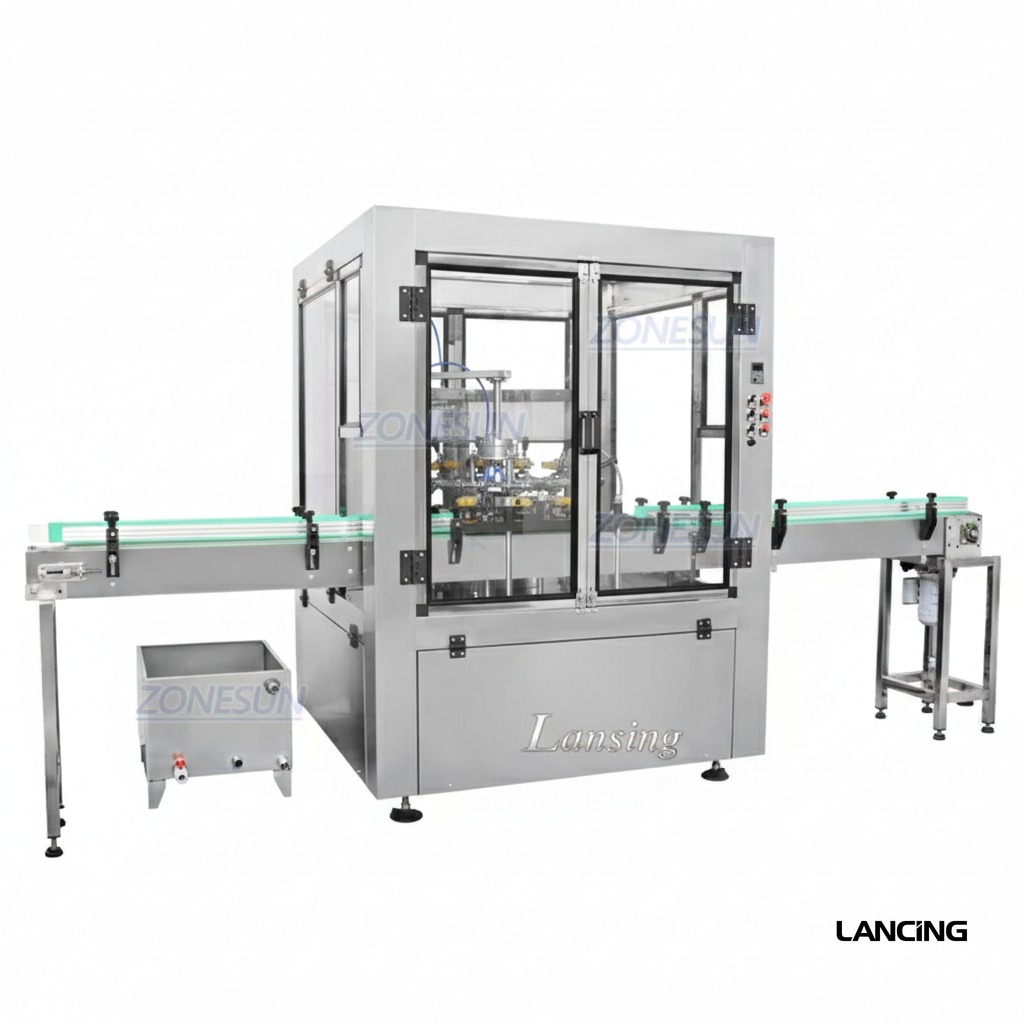
Automatic inline washing
For conveyor-fed production lines where repeatability and integration with filling equipment matter.
Read moreInternal bottle washing focuses on the bottle surfaces that contact the product, so nozzle access, neck opening and drainage are critical.
The bottle neck opening, internal shape, base profile and shoulder geometry affect how well wash media reach the inside surfaces. Samples help confirm whether an internal wash is realistic at the desired speed.
Internal washing must allow enough wash time and drainage time for residue, particles or rinse water to exit the bottle before the next stage.
These points help separate a useful bottle washing enquiry from a generic search.
Use these pages to compare automatic, semi-automatic and wash-dry options before sending samples or drawings.
For conveyor-fed production lines where repeatability and integration with filling equipment matter.
Read moreFor flexible bottle runs where the machine needs a compact footprint and operator involvement.
Read moreFor bottle formats where residual water after washing may affect filling, labelling or downstream handling.
Read moreIt is washing focused on the inside product-contact surfaces of the bottle.
Yes. Neck diameter and shape affect nozzle access and rinse performance.
It depends on the product and process. Some applications require drying before filling or labelling.
Send bottle photos, bottle dimensions, residue details, target output and whether the machine needs to connect to an existing filler, capper, labeller or conveyor.
Request a bottle washer quote