Bottle de-labelling machines
Plan label removal before washing for returned glass bottles.
Read moreReturnable glass bottle projects need careful planning around label removal, residue, washing, inspection and suitability for reuse.
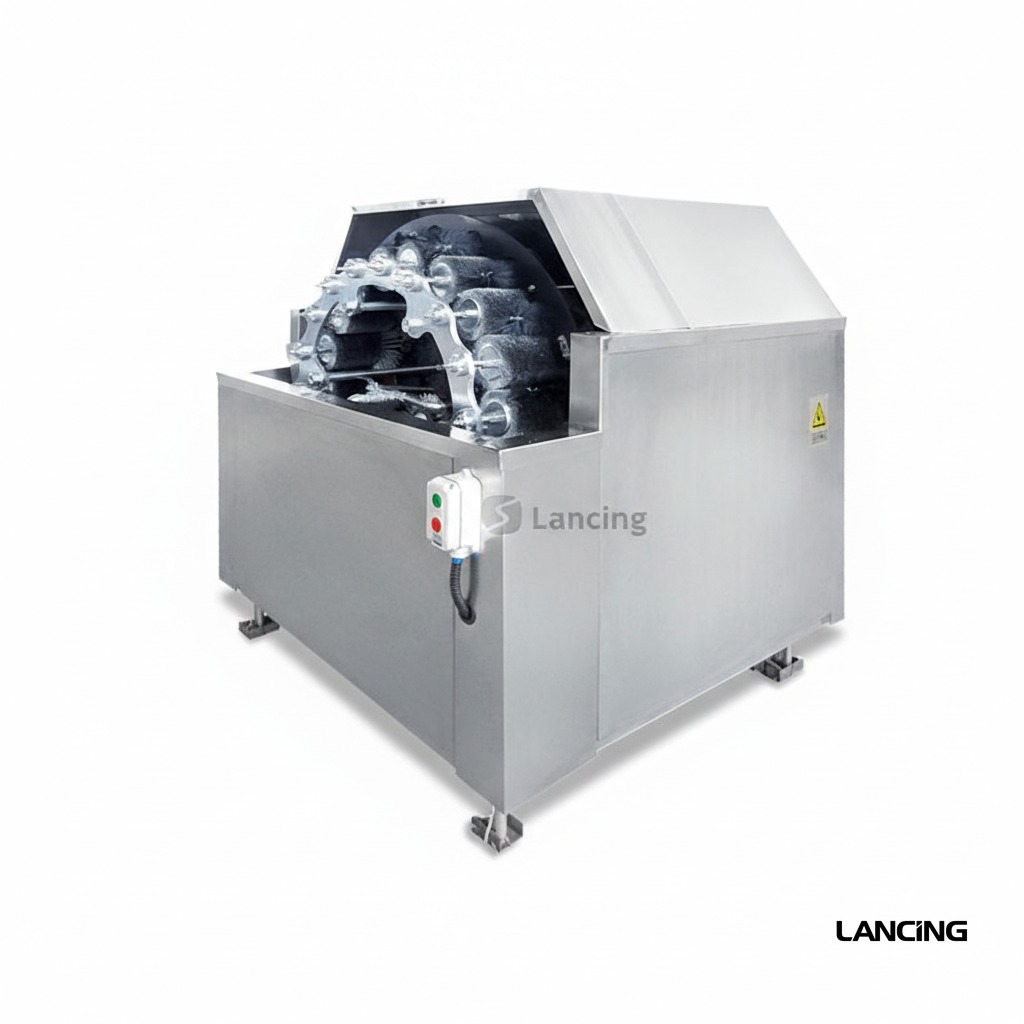
Returned glass bottles may carry labels, adhesive, dust, old product, storage marks or damage. A reuse workflow should include de-labelling, washing, inspection and rejection criteria.
The amount of residue, label type, bottle age, storage condition and required cleanliness all affect whether a returnable-bottle washer is viable and how much automation is justified.
These points help separate a useful bottle washing enquiry from a generic search.
Use these pages to compare automatic, semi-automatic and wash-dry options before sending samples or drawings.
They can be considered if the bottles are suitable, inspected and processed through an appropriate cleaning workflow.
Labels and adhesive can interfere with washing, inspection and re-labelling.
Yes. Returnable workflows usually need deeper washing and preparation than a simple pre-fill rinse.
Send bottle photos, bottle dimensions, residue details, target output and whether the machine needs to connect to an existing filler, capper, labeller or conveyor.
Request a bottle washer quoteGlass bottle reuse should be specified around incoming variation, bottle integrity, label and adhesive behaviour, cleaning acceptance and the downstream filling requirement.
Review the LU-BLR18 page and arrange a sample assessment for the real label and adhesive system.
View the LU-BLR18 label-removal machinePlan sorting, de-labelling, washing, drying and inspection as a complete sequence.
Plan the returnable-bottle workflowA returnable-bottle washer should be assessed against the mix of bottles arriving at the site, not only against a recently emptied clean sample. Separate the incoming material into recognisable conditions: intact bottles with removable labels, dried product residue, strongly bonded labels or adhesive, and bottles that should be rejected before washing. Record approximate proportions from actual deliveries rather than assuming every return is alike.
Choose trial samples from those groups and keep their history identifiable. Ask the washer supplier which conditions the proposed process is intended to handle and which must be removed upstream. Label removal, residue removal and final inspection should each have a defined outcome. A clean-looking exterior can coexist with internal residue, and removing the label does not show that adhesive has been removed adequately for subsequent labelling.
The site layout also needs a route from dirty-bottle reception to cleaned-bottle discharge that avoids mixing the two streams. Include reject handling, removed labels, drainage, access for cleaning and the transfer to the filler in the review. Returnable washing is a staged process; additional equipment or handling may be necessary around the washer itself. Approve the complete workflow against the quality requirements for the intended reuse.
Use traceable examples of normal returned conditions, including difficult residues and labels, plus agreed reject examples kept separate from acceptable trial stock.
No. Residue, adhesive, bottle integrity and the required cleaning outcome still need their own checks before release to filling.